
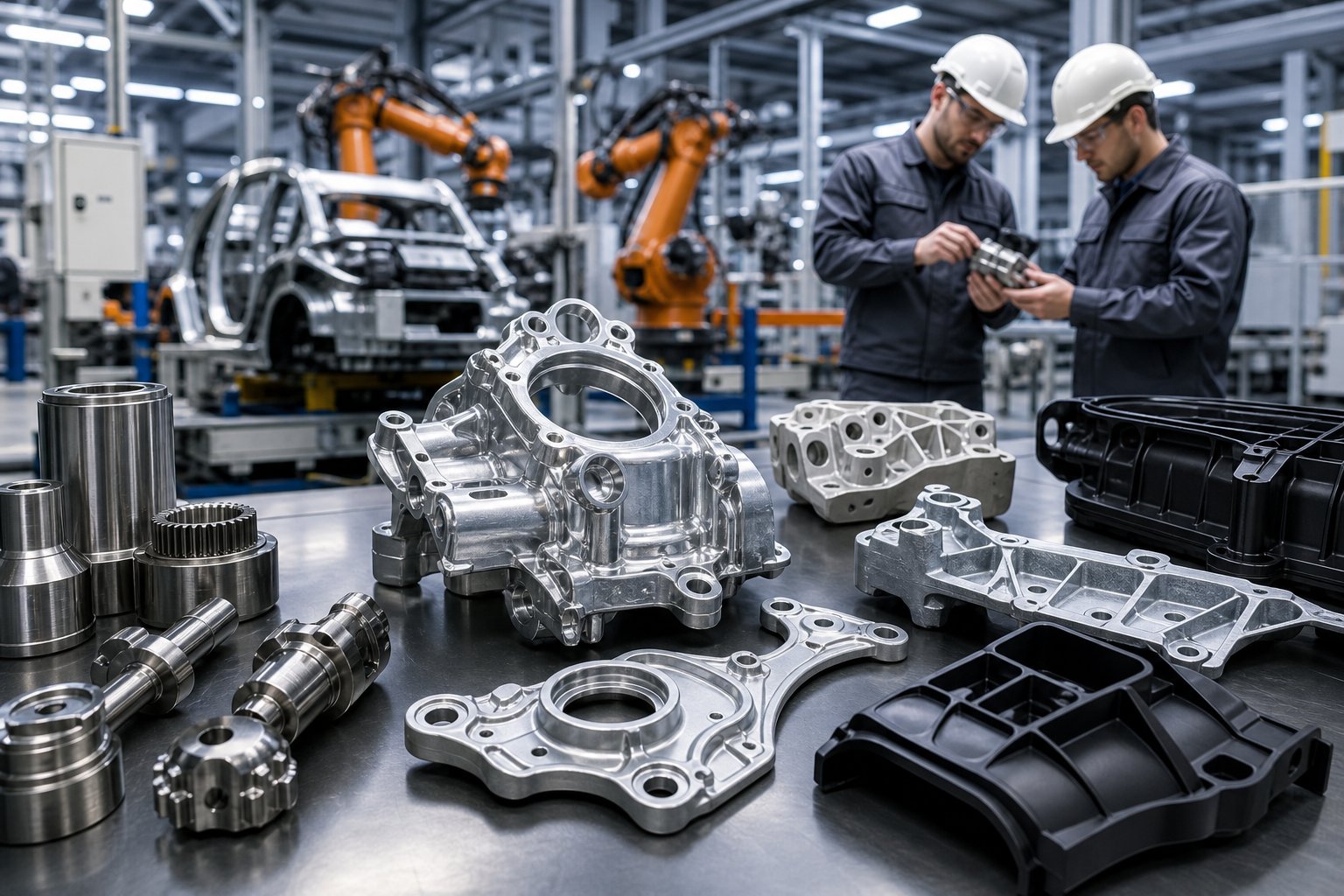
Zinc Die Casting in Automotive Manufacturing
Car manufacturers need parts that are strong, precise, and affordable to make in large quantities. Zinc die casting has become one of the most trusted methods for creating these components.
This manufacturing process combines molten zinc alloys with high-pressure moulds to produce complex shapes with excellent accuracy.
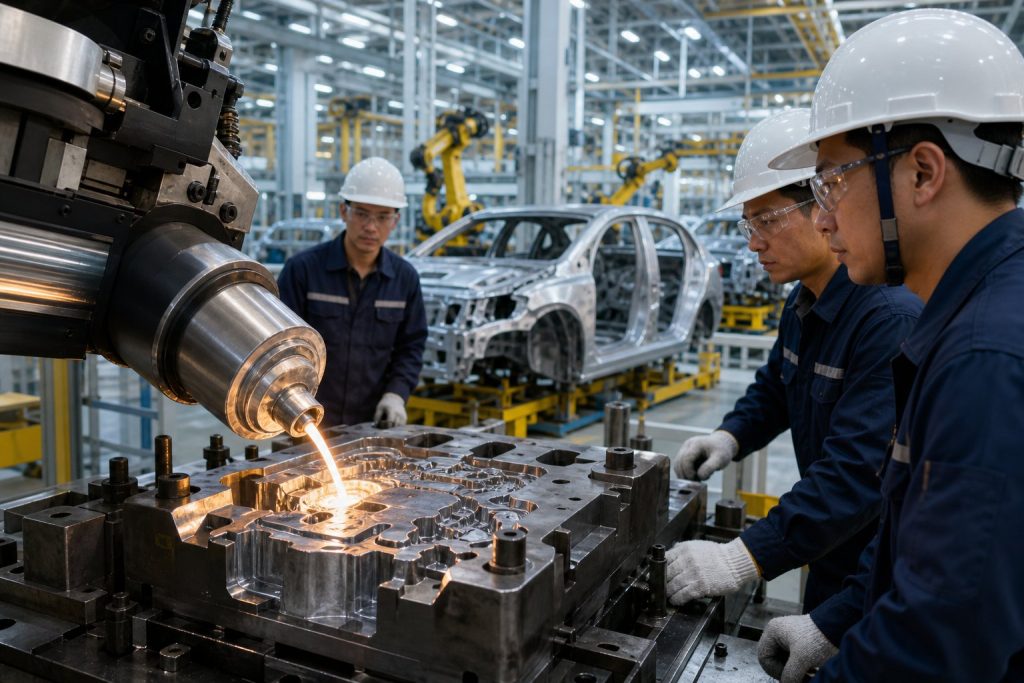
Zinc die casting offers automotive manufacturers a unique combination of strength, precision, cost efficiency, and fast production speeds that few other materials can match.
The process works well for making everything from door handles to electronic housings. Parts come out of the mould with smooth surfaces that are ready for finishing touches like painting or plating.
This guide will show you why zinc die casting has become so popular in automotive manufacturing.
You’ll learn about the specific alloys used, how zinc compares to other materials, and which parts are commonly made with this process.
We’ll also cover current industry trends and what the future holds for automotive die casting applications.
Core Advantages of Zinc Die Casting for Automotive Components
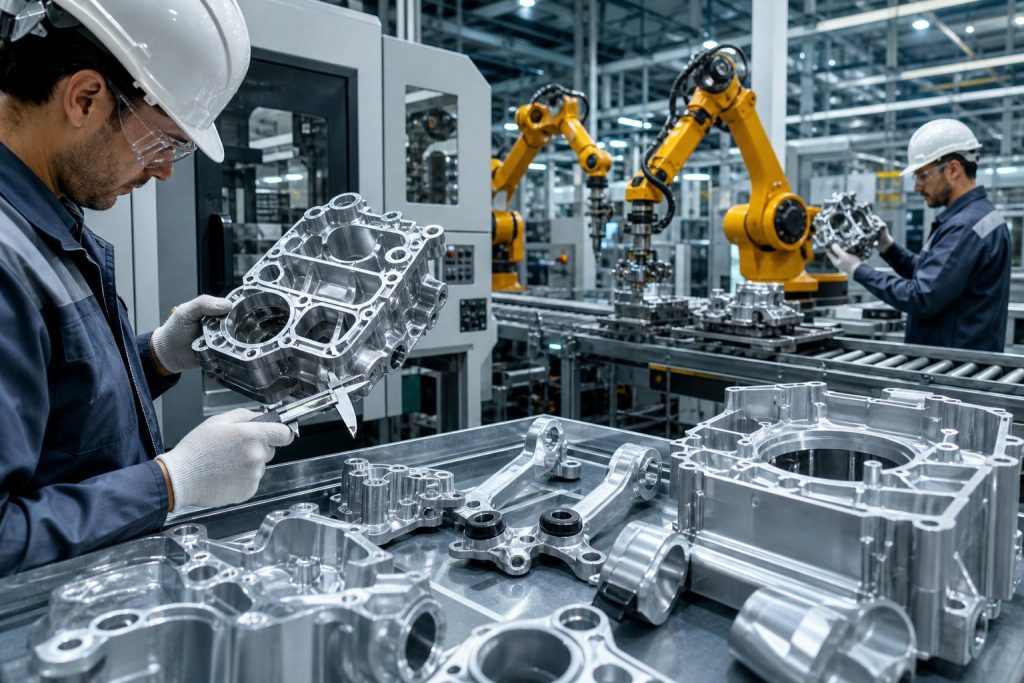
Zinc die casting delivers precise dimensions within tight tolerances. It produces parts with superior surface finishes and offers mechanical properties that resist wear while maintaining corrosion resistance over extended service life.
Dimensional Accuracy and Tight Tolerances
Zinc die casting achieves high dimensional accuracy, making it suitable for automotive components requiring precise fits. The process maintains tolerances as tight as ±0.025 mm for critical dimensions.
This level of precision reduces the need for secondary machining operations.
The material’s low melting point and excellent fluidity allow zinc to fill complex mould cavities completely. This characteristic ensures dimensional stability across large production runs.
Your components will match specifications consistently. This improves assembly efficiency and reduces rejection rates.
Zinc alloys show minimal shrinkage during cooling compared to other die-cast metals. This property helps maintain the dimensional stability of finished parts even in applications with temperature variations.
Superior Surface Finish and Appearance
Parts produced through zinc die casting feature a good surface finish directly from the mould. The process typically achieves surface roughness values between 1.0 and 2.5 micrometres without additional finishing.
This quality eliminates or reduces polishing requirements for many applications. The superior surface finish of zinc die castings accepts various coating treatments well.
You can apply chrome plating, powder coating, or paint with minimal surface preparation. This versatility allows manufacturers to meet aesthetic requirements for visible automotive components.
Zinc’s fine grain structure contributes to smooth surface characteristics. The material flows into fine details and sharp corners within moulds, replicating intricate design features accurately.
This capability proves valuable for decorative trim pieces and functional components with complex geometries.
Mechanical Properties and Wear Resistance
Zinc alloys used in automotive die casting provide tensile strengths ranging from 280 to 420 MPa, depending on the specific composition. These mechanical properties suit semi-structural and functional components that experience moderate loads during operation.
The material maintains its strength across typical automotive operating temperatures. Wear resistance in zinc die castings comes from the alloy’s hardness and ability to retain lubricants.
Components such as gears, latches, and adjustment mechanisms benefit from this characteristic. The material resists surface degradation from repeated friction and contact.
Zinc alloys offer good impact resistance for their weight class. This property protects components from damage during assembly and use while keeping part mass low.
Corrosion Resistance and Longevity
Zinc naturally forms a protective oxide layer when exposed to air and moisture. This barrier provides inherent corrosion resistance that extends component life in automotive environments.
The protection works effectively against road salt, humidity, and temperature cycling. Additional surface treatments enhance the base corrosion resistance of zinc die castings.
Chrome plating adds a decorative finish while improving protection. Powder coating creates a durable barrier for parts in harsh underbody locations.
Your zinc die-cast components maintain their protective properties throughout their service life. The material doesn’t corrode from the inside out like ferrous metals.
This characteristic ensures reliable performance in door handles, window mechanisms, fuel system components, and electrical housings that face long-term exposure to environmental factors.
Zinc Alloys Used in Automotive Die Casting
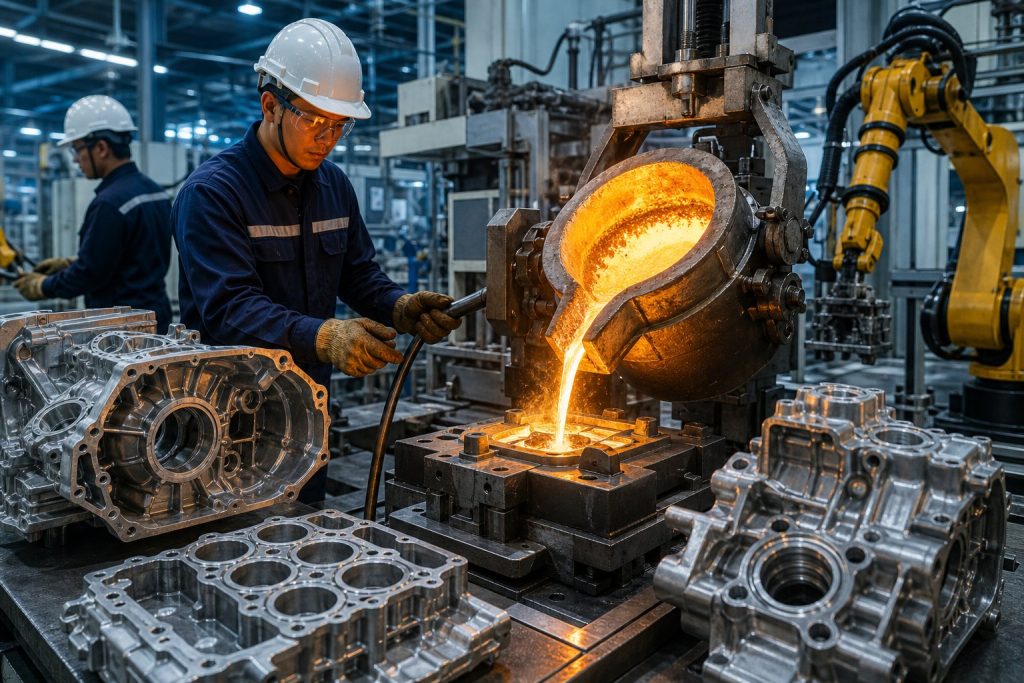
Automotive manufacturers rely on specific zinc alloys engineered to deliver strength, precision, and manufacturing efficiency. The Zamak family and ZA series dominate the industry, while speciality alloys address niche performance requirements.
Overview of Common Automotive Alloys
Zinc-based alloys offer unique advantages for automotive applications due to their excellent castability and mechanical properties. These materials allow you to produce complex components with tight dimensional tolerances while maintaining cost-effectiveness at high production volumes.
The most common zinc alloys fall into two main categories: Zamak alloys and ZA (zinc-aluminium) alloys. Zamak alloys contain about 4% aluminium and small amounts of copper and magnesium.
ZA alloys contain higher aluminium content, typically 8-12%, which provides enhanced strength and wear resistance.
Your choice of alloy depends on several factors, including required mechanical strength, dimensional stability, corrosion resistance, and casting method compatibility.
Most automotive applications use hot chamber die casting, which works best with lower-melting-point Zamak alloys.
Zamak Family: Zamak 3, Zamak 5, Zamak 2
Zamak 3 is the most widely used zinc alloy in automotive manufacturing. It provides excellent dimensional accuracy and stability, making it ideal for components like door handles, lock housings, and trim parts.
This alloy contains 4% aluminium and offers good corrosion resistance without additional copper content. Zamak 5 includes 1% copper, which increases strength and hardness compared to Zamak 3.
You’ll find this alloy in applications requiring higher mechanical performance, such as steering column components and structural brackets. The added copper slightly reduces ductility but improves wear resistance.
Zamak 2 contains the highest copper content at 3%, delivering maximum hardness and strength within the Zamak family. However, its use is more limited due to reduced dimensional stability over time.
You might select this alloy for smaller components where strength takes priority over long-term dimensional precision.
ZA Series: ZA-8 and ZA-12
ZA-8 contains 8% aluminium and offers superior strength-to-weight ratios compared to standard Zamak alloys. This material provides excellent wear resistance and creep strength at elevated temperatures.
You can use ZA-8 for demanding applications like transmission components, gear housings, and fuel system parts. ZA-12 features 12% aluminium content, making it the strongest zinc die casting alloy available.
It approaches the mechanical properties of aluminium while maintaining zinc’s superior casting characteristics. The higher aluminium content requires careful processing, as ZA-12 typically uses cold chamber die casting rather than hot chamber methods.
Both ZA alloys exhibit excellent bearing and wear properties. This makes them suitable for components subject to friction and mechanical stress during vehicle operation.
Speciality Alloys: AcuZinc5 and Others
AcuZinc5 represents a newer generation of zinc alloys developed for enhanced performance characteristics. This proprietary alloy addresses specific automotive requirements where standard zinc alloys may fall short.
It offers improved corrosion resistance and dimensional stability. Other speciality zinc alloys include modified compositions designed for particular casting methods or performance criteria.
Some alloys incorporate grain refiners or additional alloying elements to enhance specific properties. These materials might target applications requiring exceptional surface finish, electromagnetic shielding, or compatibility with specific surface treatments.
Manufacturers continue developing new zinc alloy formulations to meet evolving automotive industry demands. Your selection of speciality alloys depends on unique application requirements that standard Zamak or ZA alloys cannot fully satisfy.
Comparison of Zinc with Other Materials in Automotive Manufacturing
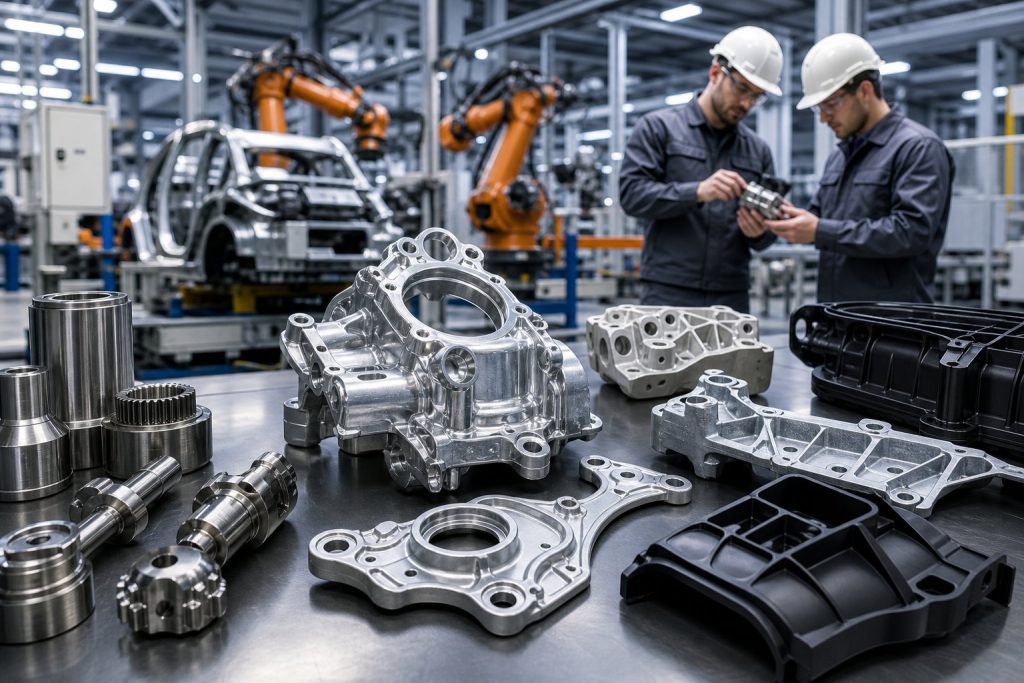
Zinc die casting competes with several materials in automotive applications. Each offers different combinations of strength, weight, cost, and manufacturing characteristics.
Aluminium provides lighter weight, steel offers superior strength, and plastics deliver cost savings for non-structural components.
Zinc vs Aluminium
Zinc alloys are denser than aluminium, so parts weigh about 2.5 times more for the same volume. However, zinc offers superior casting fluidity, allowing you to produce thinner walls and more intricate geometries, which can partially offset the weight penalty.
Zinc die casting achieves tighter dimensional tolerances than aluminium. Typically, it holds ±0.05 mm compared to ±0.1 mm for aluminium.
This precision reduces or eliminates secondary machining operations. The material also provides an excellent surface finish straight from the mould, making it ideal for visible components or parts requiring plating.
Cost considerations favour zinc for smaller components produced in high volumes. Zinc tooling lasts longer because of lower operating temperatures (420°C vs 660°C for aluminium).
The material costs more per kilogramme, but the improved productivity and reduced finishing requirements often result in lower total part costs. Aluminium becomes the better choice when weight reduction is critical for fuel efficiency or when larger structural components are needed.
Your selection depends on whether dimensional accuracy and surface quality or weight savings matter more for your specific application.
Zinc vs Steel
Steel offers significantly higher tensile strength than zinc alloys. Common steel grades reach up to 400 MPa, while zinc achieves 280-320 MPa.
You’ll need steel for highly stressed structural components and suspension parts. Steel also suits applications that require extreme durability.
Zinc provides better corrosion resistance than uncoated steel without extra surface treatments. Steel needs painting, galvanising, or other coatings to prevent rust, but zinc naturally forms a protective oxide layer.
The die casting process for zinc is more efficient than steel forming or casting. You can produce complex zinc parts in single operations, while steel would require multiple steps, welding, or assembly.
This manufacturing advantage lowers labour costs and speeds up production. Steel’s weight sits between zinc and aluminium on a volume basis.
When strength-to-weight ratio matters, steel or aluminium usually outperform zinc. For small to medium components where moderate strength, excellent detail, and corrosion resistance are needed, zinc offers better economics than steel fabrication.
Zinc vs Copper, Brass, and Bronze
Copper alloys like brass and bronze share some characteristics with zinc. They all provide good corrosion resistance and excellent machinability.
These materials cost significantly more than zinc—often three to five times higher per kilogramme. Zinc die casting produces parts faster and more economically than copper alloy casting or machining.
The lower melting point of zinc (420°C) compared to brass (900-940°C) reduces energy use and extends tool life. Electrical conductivity is where copper alloys excel.
Copper conducts electricity about five times better than zinc. You’ll need copper, brass, or bronze for electrical contacts and connectors that require high current capacity.
Brass offers superior wear resistance for sliding components, bushings, and bearings. For automotive parts not needing exceptional electrical or thermal properties, zinc provides similar corrosion resistance and mechanical strength at a much lower cost.
Zinc vs Plastics: ABS, PE, PP, PLA, TPU
Plastics like ABS, PE, PP, PLA, and TPU offer significant weight and cost advantages over zinc for non-structural components. These materials weigh 80-85% less than zinc and need lower-cost tooling for injection moulding.
You cannot match zinc’s mechanical strength with plastics. Zinc alloys handle loads, impacts, and temperatures that would deform or melt plastic parts.
Metal also provides electromagnetic shielding that plastics cannot deliver without additives or coatings. Dimensional stability under temperature varies greatly.
Zinc maintains its shape across automotive operating temperatures (-40°C to 150°C). Plastics expand, contract, and creep, with PP and PE especially susceptible to thermal movement.
Plastics work well for interior trim, covers, and non-stressed housings. Their light weight and design flexibility offer advantages.
When you need structural integrity, heat resistance, durability, or premium surface quality, zinc die casting delivers properties that plastics cannot achieve.
Typical Zinc Die-Cast Automotive Parts and Use Cases
Zinc die-cast parts appear throughout modern vehicles, from interior hardware to under-bonnet components. These applications take advantage of zinc’s ability to form complex shapes with tight tolerances while maintaining strength and durability.
Structural Brackets and Housings
Structural brackets made from zinc die castings provide mounting points for various automotive systems. These components secure items like sensors, electrical assemblies, and small mechanical units to the vehicle frame or body panels.
Zinc’s high strength-to-weight ratio makes it suitable for brackets that must hold position under vibration and thermal cycling. Housings protect sensitive components from environmental damage while maintaining precise dimensions.
You’ll find zinc die-cast housings around electronic control units, transmission sensors, and climate control components. The material’s excellent casting properties allow manufacturers to integrate mounting features, cable routing channels, and sealing surfaces directly into the housing design.
Many semi-structural applications benefit from zinc’s dimensional stability. The material maintains its shape across temperature changes, which helps prevent misalignment issues during production.
Door Handles, Locking Systems, and Gears
Door handles are one of the most visible zinc die casting applications in vehicles. The material accepts chrome plating, painting, and powder coating to create attractive, durable finishes.
Zinc handles resist corrosion from weather and repeated contact with hands. Locking systems use zinc die-cast components for their internal mechanisms.
Lock cylinders, latches, and striker plates benefit from zinc’s ability to maintain tight tolerances for smooth operation. The material’s wear resistance helps these parts function reliably through thousands of lock-unlock cycles.
Gears and bushings in automotive systems use zinc die castings where moderate loads and precise tooth profiles matter. Small transmission gears, seat adjustment mechanisms, and window regulator components often specify zinc alloys.
These parts require the dimensional accuracy that die casting delivers at high production volumes.
Electronic Enclosures and Sensor Housings
Electronic enclosures made from zinc die castings shield sensitive circuits from electromagnetic interference and physical damage. The material’s natural EMI shielding protects electronic control units without extra coating steps.
These enclosures often integrate mounting bosses, connector ports, and heat dissipation features in a single casting. Sensor housings protect devices that monitor everything from parking assistance to engine parameters.
Zinc die-cast sensor housings maintain the precise positioning that ensures accurate measurements. The material resists the temperature extremes and vibration found in automotive environments.
You’ll find these housings around radar sensors, camera modules, and pressure transducers. The die-casting process creates thin walls that minimise weight while protecting delicate electronics.
Engine Components and Connectors
Engine components made through zinc die casting include various smaller parts that operate in demanding thermal environments. Fuel system brackets, coolant fittings, and air intake components use zinc alloys formulated for high temperature resistance.
These parts maintain their mechanical properties despite repeated heating and cooling cycles. Connectors and terminal blocks in electrical systems benefit from zinc’s conductivity and corrosion resistance.
Battery terminal clamps, earthing straps, and junction box components often specify zinc die-cast parts. The material accepts various plating treatments that improve electrical performance and prevent oxidation.
Mounting hardware for alternators, power steering pumps, and air conditioning compressors often uses zinc die castings. These components must withstand constant vibration while maintaining their clamping force and dimensional accuracy throughout the vehicle’s service life.
Process Overview and Precision Manufacturing
Zinc die casting achieves exceptional precision through controlled manufacturing stages. These combine high-pressure injection, rapid cycling, and specialised finishing techniques.
Modern facilities integrate automation systems that maintain consistent quality. These systems also reduce manual handling and production costs.
High-Volume Production and Automation
Zinc die casting excels in high-volume production where manufacturers need thousands to millions of identical parts. The hot chamber die casting method allows continuous operation with minimal downtime between cycles.
Automated systems handle material feeding, part ejection, and quality inspection without human intervention. Robotic arms extract finished components from dies within seconds and move them to cooling stations or directly into secondary processing.
This automation reduces labour costs by up to 40% compared to manual operations. Modern facilities use programmable logic controllers (PLCs) to monitor melt temperature, injection pressure, and cycle timing.
These systems adjust parameters in real-time to maintain dimensional accuracy across production runs. Sensors detect defects like incomplete fills or surface imperfections and automatically reject faulty parts before they enter your supply chain.
Cycle Time and Die Life
Zinc alloys enable faster cycle times than competing materials due to their lower melting point of about 440°C. Your typical zinc die casting cycle completes in 15 to 45 seconds, depending on part complexity and wall thickness.
Dies for zinc casting last much longer than those for aluminium. You can expect 500,000 to 1 million shots per die set under normal conditions.
This extended die life reduces tooling costs by about 50% compared to aluminium die casting. The hot chamber process eliminates metal transfer steps that slow down production.
The injection system stays submerged in molten zinc, drawing material directly into the die cavity. This design reduces thermal cycling stress on equipment and keeps metal temperature consistent throughout production.
Deburring, Trimming, and Surface Finishing
Parts exit the die with flash and excess material along parting lines that need removal. Deburring operations use vibratory tumblers, belt sanders, or automated trimming presses to eliminate these imperfections.
Zinc’s softness compared to steel makes trimming faster and less tool-intensive. Your finishing equipment lasts longer when processing zinc parts versus harder metals.
Automated trimming presses can remove flash from multiple parts at once, maintaining high throughput. Surface finishing for zinc die castings ranges from basic deburring to precision polishing.
Vibratory finishing systems with ceramic media smooth surfaces and prepare parts for coating. The natural surface quality of zinc die castings often removes the need for extensive machining or secondary finishing.
Plating and Powder Coating Solutions
Zinc die castings accept various plating and coating solutions that boost corrosion resistance and visual appeal. Chrome plating provides a durable, reflective finish for exterior automotive trim and decorative parts.
Electroplating applies nickel, copper, or brass layers that improve wear resistance and electrical conductivity. Your parts go through thorough cleaning and chemical pre-treatment before plating to ensure proper adhesion.
Powder coating offers excellent durability and comes in unlimited colour options. The electrostatic application process bonds powder to zinc surfaces, which then cure in ovens at 150-200°C.
This coating resists chipping, scratching, and UV damage better than traditional paint. E-coating (electrophoretic coating) delivers uniform coverage on complex shapes where spray coating might miss recessed areas.
This solution provides superior corrosion protection for chassis components and safety-critical parts exposed to harsh conditions.
Industry Trends, Sustainability, and Future Outlook
The zinc die casting market is growing steadily. Estimates place automotive parts zinc die casting between USD 6–7.4 billion in 2025 and reaching about USD 10 billion by 2034.
This growth comes from demand for lightweight components, better energy efficiency in production, and expanding use in electric vehicles and precision equipment.
Environmental Impact and Recyclability
Zinc die casting supports sustainability through high recyclability and lower energy use. You can remelt scrap zinc and production waste with minimal loss of mechanical properties.
Many manufacturers now run closed-loop systems that return excess material directly back into production. This approach cuts raw material costs and reduces waste sent to landfill.
More than 65% of automotive manufacturers rely on zinc die-cast components. Suppliers are increasing the share of recycled zinc in their feedstock.
Secondary zinc production uses less energy than extracting and refining primary metal. Modern furnaces and thermal control systems can reduce power consumption by 30–40% in some facilities.
Lower melting temperatures for zinc alloys—around 380–420°C—put less thermal stress on equipment and need less energy per cycle than aluminium or magnesium alloys. Real-time monitoring and improved process control also limit scrap rates, which means fewer defects and less remelting.
Carbon reporting requirements are tightening across Europe and other regions. If you invest in cleaner processes and traceable supply chains now, you protect future contracts and meet stricter environmental standards.
Supporting Electric Vehicles and Emerging Technologies
Electric vehicles drive much of the recent demand growth for zinc die casting.
You need precision housings for battery systems, power electronics, and control units.
Zinc alloys offer tight tolerances, smooth surface finishes, and thin-wall capability that suit these applications.
Car makers work to meet emissions targets by replacing heavier materials in selected components.
Zinc die casting enables complex shapes that reduce part count and assembly steps.
You also see steady use in consumer electronics, industrial equipment, and medical devices, where dimensional stability and corrosion resistance matter.
Automation and digital integration now reshape production.
Smart manufacturing systems track temperature, pressure, and cycle time in real time.
Robotics handle part removal, trimming, and inspection, which improves safety and consistency.
Vacuum die casting methods reduce internal porosity and improve structural integrity for high-strength requirements.
Key sectors expanding zinc die casting use:
- Electric vehicle components (battery housings, connectors, structural brackets)
- Consumer electronics (casings, heat sinks, mounting hardware)
- Medical devices (surgical instruments, equipment housings)
- Industrial equipment (sensors, actuators, control systems)
- Aerospace (lightweight brackets, sensor housings)
Challenges and Innovations in Automotive Zinc Die Casting
You face pressure to cut costs while meeting stricter quality and design demands.
Zinc alloys weigh more than aluminium or magnesium, so you must design thinner walls and optimise shapes to stay competitive.
Advanced simulation tools now predict filling patterns, air entrapment, and thermal stress before tooling is cut.
This lowers development risk.
Process innovations such as hot runner systems remove traditional sprues and runners.
This reduces scrap and shortens cycle times.
You gain higher cavity counts per tool and more stable melt temperature.
Improved gooseneck designs for hot chamber machines limit air entry and reduce gas porosity.
Quality control relies on both inspection and prevention.
Non-destructive testing methods such as X-ray and CT scanning detect internal voids without cutting parts.
Statistical process control tracks variation over time and helps you identify root causes before defects occur.
Shorter lead times and faster tooling changes are now expected.
Modular tooling and data-driven optimisation help you adjust quickly without long shutdowns.
Strong supplier partnerships for certified, traceable materials support these goals and prepare your operations for future regulatory shifts.
Frequently Asked Questions
Zinc die casting raises practical questions about process mechanics, material selection, and how it compares with alternative manufacturing methods in automotive production.
These answers address specific technical considerations, alloy specifications, and cost-performance trade-offs that influence component decisions.
What is zinc die casting and how does the process work for automotive parts?
Zinc die casting injects molten zinc alloy into precision steel moulds under high pressure.
The process typically uses hot chamber die casting, where the injection mechanism stays submerged in the molten metal bath.
The cycle starts when molten zinc at temperatures between 380°C and 420°C fills the mould cavity in milliseconds.
The metal solidifies quickly due to zinc’s low melting point.
After cooling for a few seconds, the mould opens and ejectors push out the finished part.
This rapid cycle time allows manufacturers to produce thousands of identical parts per day from a single mould.
The high injection pressure ensures the molten zinc fills every detail of the mould cavity.
This creates parts with sharp features and tight tolerances without secondary machining.
What are the main advantages of using zinc die casting for high-volume vehicle component production?
Zinc die casting delivers excellent dimensional stability across production runs.
Parts maintain consistent measurements even after producing millions of units.
This repeatability reduces assembly problems and keeps rejection rates low.
The process offers faster cycle times than aluminium die casting because zinc melts at lower temperatures and solidifies more quickly.
You can produce more parts per hour, which lowers your per-unit manufacturing cost in high-volume scenarios.
Zinc alloys provide superior surface finish straight from the mould.
Many automotive parts require minimal post-processing, which eliminates extra finishing steps.
The material also accepts plating, powder coating, and chromate treatments easily for enhanced appearance or corrosion protection.
The moulds last longer when casting zinc compared to higher-temperature metals.
Lower operating temperatures create less thermal stress on the tooling.
This extended mould life further reduces your total cost per part over the production lifetime.
How does zinc die casting compare with aluminium die casting in terms of strength, weight, cost and dimensional accuracy?
Zinc alloys offer higher tensile strength than most aluminium die casting alloys, typically ranging from 280 to 420 MPa depending on the specific alloy.
Aluminium provides better strength-to-weight ratios because it weighs about one-third less than zinc for the same volume.
Weight becomes the deciding factor when reducing vehicle mass is critical for fuel efficiency.
Aluminium suits larger structural components where weight savings justify higher material and processing costs.
Zinc works better for small parts where the absolute weight difference measures in grammes rather than kilogrammes.
Zinc die casting produces tighter dimensional tolerances, often achieving ±0.05 mm on critical dimensions without secondary operations.
Aluminium typically requires more generous tolerances or additional machining.
This precision advantage makes zinc preferable for parts with strict fit requirements.
Material costs favour zinc in many regions, though prices fluctuate with commodity markets.
The bigger cost advantage comes from faster cycle times and longer tool life.
Your total manufacturing cost per part often runs lower with zinc for components under 500 grammes.
Which zinc die casting alloys are most commonly specified for automotive applications, and why?
Zamak 3 serves as the most widely used zinc alloy for automotive components.
It offers an excellent balance of strength, ductility, and casting fluidity.
The alloy contains approximately 4% aluminium and small amounts of magnesium, which provide good impact strength and dimensional stability.
Zamak 5 contains additional copper, giving it approximately 20% higher tensile strength than Zamak 3.
This alloy works for parts requiring extra mechanical strength or better creep resistance.
The trade-off comes as slightly reduced ductility and dimensional stability over long periods.
ZA-8 contains 8.4% aluminium and offers higher strength with lower density than standard Zamak alloys.
This alloy bridges the gap between traditional zinc alloys and aluminium.
It suits parts where you need strength approaching aluminium but want zinc’s casting advantages.
Manufacturers select alloys based on specific part requirements.
Zamak 3 handles most general-purpose automotive components.
Zamak 5 goes into load-bearing parts.
ZA-8 works for applications demanding maximum strength without switching to aluminium.
What typical automotive components are best suited to zinc die casting, and what performance requirements do they meet?
Door handles and locking mechanisms use zinc die casting because the process creates complex geometries with precise tolerances needed for smooth operation.
These parts require good surface finish for aesthetic appeal and consistent dimensions for reliable mechanical function.
Brackets and mounting hardware throughout the vehicle take advantage of zinc’s strength and dimensional stability.
These components hold sensors, electronic modules, and trim pieces.
They need to maintain exact positioning over the vehicle’s lifetime despite temperature changes and vibration.
Electrical housings protect sensitive components like sensor assemblies and control modules.
Zinc die casting provides excellent electromagnetic shielding properties.
The tight tolerances ensure proper sealing against dust and moisture.
Small gears, latches, and adjustment mechanisms benefit from zinc’s wear resistance and ability to hold fine details.
These parts often include teeth, ratchets, or other features requiring precision.
The material’s hardness prevents deformation under repeated use.
Decorative trim pieces, emblems, and bezels use zinc for its superior finishing characteristics.
You can achieve chrome plating or other premium finishes that meet automotive appearance standards.
The dimensional accuracy ensures consistent gaps and flush mounting.
How does zinc die casting compare with stainless steel components for corrosion resistance, durability and total manufacturing cost?
Stainless steel offers superior corrosion resistance in harsh environments without surface treatment. Zinc die castings require protective coatings like chromate conversion, powder coating, or plating when exposed to road salt and moisture.
Properly finished zinc performs well for most automotive applications. Stainless steel provides higher tensile strength and better high-temperature performance than zinc alloys.
Steel maintains its properties at engine compartment temperatures where zinc may experience long-term creep. This makes steel necessary for components operating above 100°C continuously.
Zinc die casting offers lower manufacturing costs for complex shapes. Producing intricate stainless steel parts requires machining, stamping, or multiple welding operations.
Zinc die casting creates finished parts in seconds with minimal secondary operations. Zinc’s lower melting point and excellent fluidity allow you to cast thinner walls and finer details than steel.
You can consolidate multiple steel stampings or machined pieces into a single zinc casting. This part consolidation reduces assembly time and eliminates fasteners.
The total cost equation depends on production volume and part complexity. Steel makes sense for simple shapes in lower volumes or extreme-duty applications.


