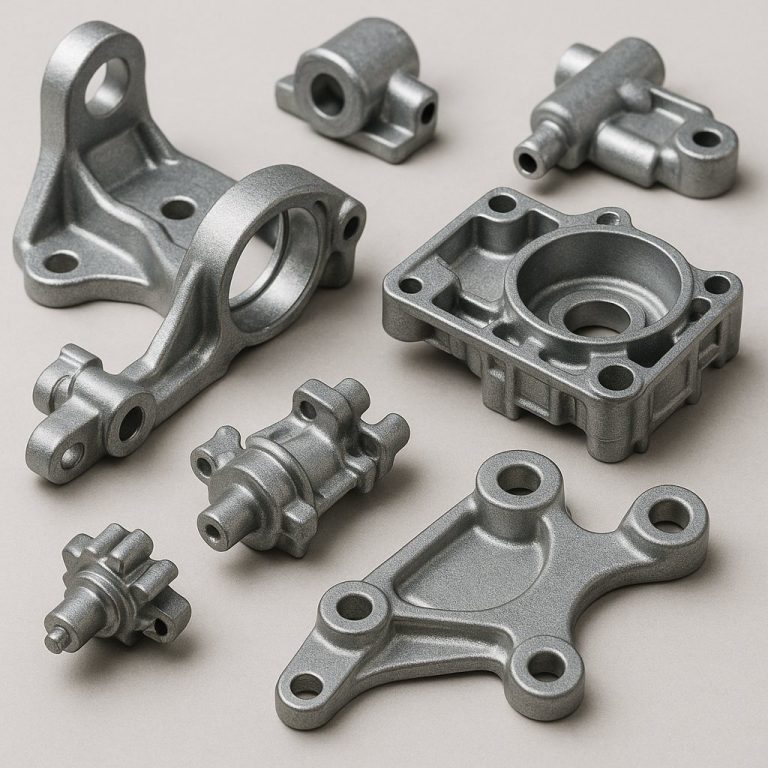
Zinc Die Casting vs Aluminum Die Casting: What Are Their Differences?
Die casting is a highly efficient manufacturing process that involves forcing molten metal into a mould cavity under high pressure. This technique is widely used for producing complex shapes with excellent dimensional accuracy and smooth surface finishes. The die casting process is particularly advantageous for high-volume production runs, as it allows for rapid cycle times and minimal waste of material.
The method is predominantly employed with non-ferrous metals, such as zinc, aluminium, magnesium, and copper, each offering unique properties that cater to various applications. The die casting process can be broadly categorised into two types: hot chamber and cold chamber die casting. Hot chamber die casting is typically used for metals with low melting points, such as zinc, where the melting pot is integrated with the injection system.
In contrast, cold chamber die casting is employed for metals with higher melting points, like aluminium, where the molten metal is poured into the chamber from an external furnace. This distinction is crucial as it influences the choice of metal and the overall efficiency of the production process.
Summary
- Die casting is a metal casting process that is characterized by forcing molten metal under high pressure into a mould cavity.
- Zinc die casting offers excellent strength, dimensional accuracy, and stability for complex shapes, while aluminum die casting provides high strength-to-weight ratio and good corrosion resistance.
- The manufacturing process of zinc die casting involves melting the zinc, injecting it into the mould, and then cooling and solidifying the metal to form the final product.
- Aluminum die casting manufacturing process includes injecting molten aluminum into a mould, allowing it to solidify, and then ejecting the final product.
- Zinc die casting offers high strength and durability, making it suitable for applications such as automotive parts, electronic components, and household appliances.
Properties of Zinc and Aluminum
Zinc and aluminium are two of the most commonly used metals in die casting, each possessing distinct properties that make them suitable for different applications. Zinc is known for its excellent fluidity, which allows it to fill intricate moulds with ease. It has a relatively low melting point of around 420 degrees Celsius, making it ideal for hot chamber die casting.
Additionally, zinc exhibits good corrosion resistance and can withstand high temperatures without losing its structural integrity. Its density is higher than that of aluminium, which contributes to its strength but also makes it heavier. Aluminium, on the other hand, is renowned for its lightweight nature and high strength-to-weight ratio.
With a melting point of approximately 660 degrees Celsius, aluminium requires cold chamber die casting techniques. This metal is also highly resistant to corrosion due to the formation of a protective oxide layer when exposed to air. Furthermore, aluminium has excellent thermal and electrical conductivity, making it a preferred choice in applications where heat dissipation or electrical conductivity is critical.
The versatility of aluminium allows it to be alloyed with various elements to enhance its properties further, catering to specific requirements in different industries.
Manufacturing Process of Zinc Die Casting

The manufacturing process of zinc die casting begins with the preparation of the die, which is typically made from hardened steel to withstand the high pressures involved in the process. The die is meticulously designed to accommodate the desired shape of the final product, including any intricate details or features. Once the die is ready, it is heated to a specific temperature to facilitate the flow of molten zinc.
The next step involves melting zinc in a furnace until it reaches a liquid state. The molten zinc is then injected into the die under high pressure using a plunger mechanism. This pressure ensures that the molten metal fills every corner of the mould, capturing all details accurately.
After the injection phase, the metal cools and solidifies rapidly within the die. Once cooled, the die is opened, and the finished part is ejected. This process can be repeated multiple times in quick succession, allowing for high-volume production.
Post-casting operations may include trimming excess material, surface finishing, and quality inspection to ensure that each component meets stringent specifications. The efficiency of zinc die casting makes it an attractive option for manufacturers looking to produce large quantities of parts with consistent quality.
Manufacturing Process of Aluminum Die Casting
| Stage | Process | Metric |
|---|---|---|
| 1 | Mould Preparation | Mould Temperature (°C) |
| 2 | Aluminum Melting | Metal Temperature (°C) |
| 3 | Injection | Injection Pressure (MPa) |
| 4 | Cooling | Cooling Time (seconds) |
| 5 | Ejection | Ejection Force (kN) |
Aluminium die casting follows a similar fundamental process but requires specific adaptations due to the higher melting point of aluminium. The initial step involves designing and fabricating a robust die that can withstand the intense pressures and temperatures associated with aluminium casting. The die must be constructed from durable materials such as steel or iron to endure repeated use without significant wear.
Once the die is prepared, aluminium is melted in an external furnace until it reaches its liquid state. The molten aluminium is then poured into a cold chamber machine where it is injected into the die under high pressure using a piston mechanism. This method ensures that the molten metal fills the mould completely and accurately replicates the desired shape.
The cooling process occurs rapidly as well, allowing for quick solidification of the aluminium within the die. After cooling, the die is opened, and the cast part is removed. Similar to zinc die casting, post-processing steps such as trimming, machining, and surface finishing are often necessary to achieve the desired specifications and surface quality.
The entire process can be repeated efficiently, making aluminium die casting a preferred choice for producing complex components in various industries.
Strength and Durability of Zinc Die Casting
Zinc die castings are known for their impressive strength and durability, making them suitable for a wide range of applications. The inherent properties of zinc contribute to its ability to withstand mechanical stress and impact without deforming or breaking. Zinc alloys used in die casting often exhibit tensile strengths comparable to those of some steels, which makes them ideal for components that require robustness.
Moreover, zinc’s resistance to fatigue ensures that parts maintain their integrity even after repeated use under load conditions. This characteristic is particularly beneficial in applications such as automotive components and industrial machinery where reliability is paramount. Additionally, zinc’s ability to resist creep deformation at elevated temperatures further enhances its durability in demanding environments.
Strength and Durability of Aluminum Die Casting

Aluminium die castings are equally renowned for their strength and durability but offer distinct advantages due to their lightweight nature. The high strength-to-weight ratio of aluminium makes it an excellent choice for applications where reducing weight without compromising structural integrity is essential. This property is particularly advantageous in industries such as aerospace and automotive, where every gram saved can lead to improved fuel efficiency.
Aluminium alloys used in die casting can be engineered to enhance specific mechanical properties such as tensile strength and hardness. For instance, alloying elements like silicon or copper can significantly improve strength while maintaining good ductility. Furthermore, aluminium’s resistance to fatigue ensures that components can endure cyclic loading without failure over extended periods.
This durability makes aluminium die castings suitable for critical applications where safety and performance are paramount.
Cost Comparison between Zinc and Aluminum Die Casting
When evaluating the cost-effectiveness of zinc versus aluminium die casting, several factors come into play beyond just material costs. Zinc generally has a lower raw material cost compared to aluminium, which can make it an attractive option for manufacturers looking to minimise expenses in high-volume production runs. Additionally, zinc’s lower melting point allows for reduced energy consumption during the melting process, further contributing to cost savings.
However, while zinc may be cheaper initially, aluminium offers advantages that can offset its higher material costs in certain applications. The lightweight nature of aluminium can lead to reduced shipping costs and improved fuel efficiency in transportation applications. Moreover, aluminium’s superior corrosion resistance may result in lower maintenance costs over time compared to zinc components that may require protective coatings or treatments.
Ultimately, the choice between zinc and aluminium die casting should consider not only material costs but also factors such as application requirements, performance characteristics, and long-term operational expenses.
Surface Finish and Corrosion Resistance of Zinc Die Casting
Zinc die castings are known for their excellent surface finish capabilities due to the fluidity of molten zinc during the casting process. The smooth surfaces achieved through die casting often require minimal post-processing work, which can save time and costs in production. Additionally, zinc’s natural corrosion resistance stems from its ability to form a protective oxide layer when exposed to moisture and air.
This corrosion resistance makes zinc die castings suitable for outdoor applications or environments where exposure to moisture is prevalent. However, while zinc offers good protection against corrosion, additional surface treatments such as plating or powder coating may be employed to enhance durability further and improve aesthetic appeal. These treatments can provide an extra layer of protection against environmental factors while also allowing for colour customisation.
Surface Finish and Corrosion Resistance of Aluminum Die Casting
Aluminium die castings also exhibit excellent surface finish characteristics due to their ability to fill intricate mould designs effectively. The smooth surfaces achieved through this process often require minimal finishing work as well. Aluminium’s natural corrosion resistance arises from its ability to form a stable oxide layer that protects against further oxidation when exposed to air.
This inherent corrosion resistance makes aluminium an ideal choice for applications in harsh environments or where exposure to chemicals may occur. However, depending on specific application requirements, additional surface treatments such as anodising or powder coating may be applied to enhance corrosion resistance further and improve aesthetic qualities. Anodising not only increases corrosion resistance but also allows for colour customisation while maintaining a durable finish.
Applications of Zinc Die Casting
Zinc die casting finds extensive use across various industries due to its unique properties and cost-effectiveness. One prominent application is in the automotive sector where components such as gear housings, brackets, and connectors are produced using zinc alloys. These parts benefit from zinc’s strength and durability while also being lightweight enough to contribute positively to overall vehicle performance.
Another significant application area for zinc die castings is in consumer electronics where housings for devices like smartphones and laptops are manufactured. The excellent surface finish achievable with zinc allows for aesthetically pleasing designs while providing adequate protection against impacts and environmental factors. Additionally, zinc’s corrosion resistance makes it suitable for outdoor equipment such as garden tools or lighting fixtures that require durability against weather elements.
Applications of Aluminum Die Casting
Aluminium die casting has gained popularity across numerous industries due to its lightweight nature combined with high strength characteristics. One major application area is in the aerospace industry where components such as engine casings and structural parts are produced using aluminium alloys. The reduced weight of these components contributes significantly to fuel efficiency while maintaining structural integrity under demanding conditions.
In addition to aerospace applications, aluminium die castings are widely used in automotive manufacturing for parts like engine blocks and transmission housings. The lightweight properties of aluminium help improve vehicle performance while also enhancing fuel efficiency—a critical consideration in modern automotive design. Furthermore, consumer goods such as appliances often utilise aluminium die castings due to their aesthetic appeal combined with durability.
The versatility of both zinc and aluminium die casting processes allows manufacturers across various sectors to produce high-quality components tailored specifically for their needs while benefiting from cost-effective production methods.
In the realm of die casting, understanding the nuances between zinc and aluminium die casting is crucial for selecting the appropriate material for your project. For those interested in delving deeper into the specifics of zinc die casting, an insightful article titled “What is Zinc Die Casting?” provides a comprehensive overview of the process, its benefits, and applications. This article can be accessed through the following link: What is Zinc Die Casting?. It serves as an excellent companion piece to the discussion on zinc versus aluminium die casting, offering valuable insights into why zinc might be the preferred choice for certain applications.