Future of Zinc Die Casting: Innovations, Markets & Sustainability
Zinc die casting is moving into a phase of steady growth and technical progress. You see stronger demand from the automotive and electronics sectors as companies look for precise, durable and cost‑effective metal parts. New tools and smarter systems are changing how you design and produce components.

The future of zinc die casting centres on advanced process control, improved alloy development and rising demand for lightweight, high‑precision parts across key industries. You benefit from faster cycle times, better quality control and lower material waste through systems such as hot runner technology and improved hot chamber equipment.
As markets push for efficiency and lower emissions, you can expect zinc die casting to play a larger role in modern manufacturing. Ongoing innovation in mould design, simulation tools and alloy performance will shape how you compete in the years ahead.
Key Takeaways
- Zinc die casting will grow through technology upgrades and wider industrial demand.
- Process improvements will raise quality while cutting waste and cycle times.
- Market expansion will rely on efficient production and reliable material performance.
Fundamentals of Zinc Die Casting
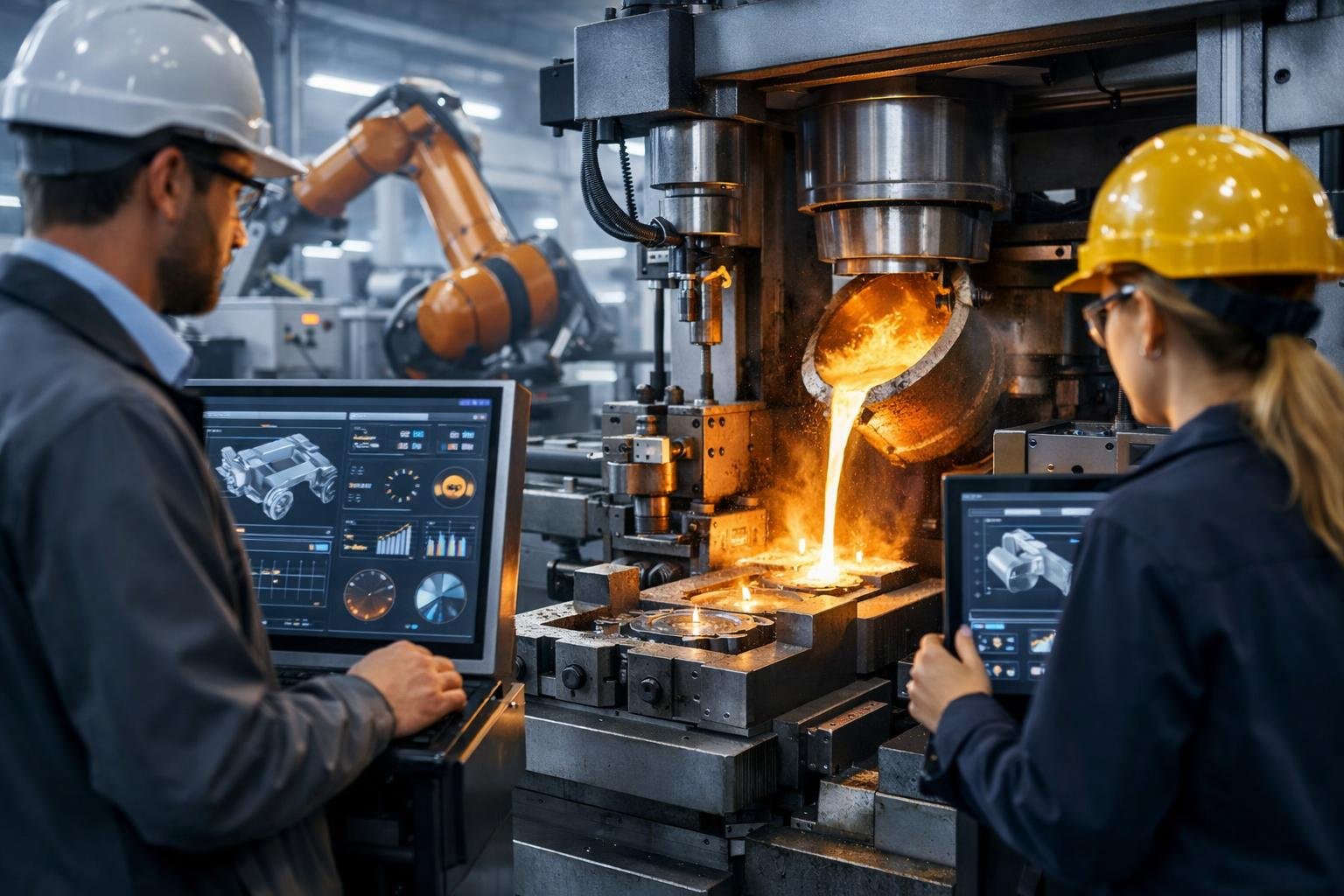
You produce zinc die castings by injecting molten zinc alloys into a hardened steel die under high pressure. This method gives you strong mechanical properties, close dimensional accuracy, and stable repeat production across large volumes.
Properties of Zinc Alloys
Zinc alloys melt at relatively low temperatures, typically around 380–420°C. This low melting point reduces thermal stress on tooling and supports long die life.
You gain a useful balance of strength, hardness, and ductility. Typical yield strength ranges from about 220 to 400 MPa, depending on the alloy. Hardness can reach roughly 120 Brinell, while elongation varies from low to moderate levels.
Zinc alloys also offer strong dimensional stability. They hold tight tolerances and maintain critical dimensions across long production runs. This stability helps you create pressure-tight parts without extra sealing features.
The density of zinc is higher than aluminium, about 6.6 g/cm³. While this increases weight, you can design thinner walls because zinc flows well and fills fine details. You also achieve smooth surface finishes, which accept plating, painting, or coating with minimal preparation.
Key Advantages over Competing Alloys
Zinc die casting gives you very high dimensional accuracy. You can cast near-net shapes, which reduces or removes secondary machining. This lowers labour, tooling, and cycle costs.
Compared with aluminium or magnesium, zinc alloys allow:
- Longer die life due to lower melting temperatures
- Faster cycle times from lower heat content
- Excellent surface finish for decorative coatings
- Thin-wall capability with fine detail
You can often combine multiple components into a single zinc die casting. The material’s strength and wear resistance reduce the need for inserts or fasteners.
Zinc does weigh more than aluminium. However, you can offset this by designing thinner sections. For many small parts, especially under one kilogram, zinc die casting remains cost-effective and precise.
Common Casting Processes
You mainly use high-pressure die casting for zinc alloys. In this process, you inject molten metal into a closed steel die at high speed and pressure. The metal solidifies quickly, allowing short cycle times and high production rates.
Two common machine types include:
- Hot chamber die casting – the injection system sits in the molten zinc.
- Cold chamber die casting – you ladle metal into a separate shot chamber.
Hot chamber systems are more common for zinc because of its low melting temperature. They offer fast cycles and efficient operation.
Modern die casting systems use closed-loop controls, shot monitoring, and temperature control units. These tools improve repeatability, reduce defects, and maintain consistent dimensional accuracy across large production batches.
Emerging Technologies and Process Improvements

You face rising demands for tighter tolerances, lower scrap rates, and reduced emissions. New process controls, digital tools, and casting methods now help you produce stronger, cleaner, and more consistent die castings at scale.
High-Pressure Die Casting Enhancements
High-pressure die casting continues to evolve through better shot control, improved tooling, and refined thermal management. You can now adjust plunger speed, pressure curves, and fill times with greater accuracy. This control reduces cold shuts, shrinkage porosity, and surface defects.
Modern hot runner systems remove the need for traditional sprues and runners. By keeping molten zinc closer to the cavity, you cut scrap and shorten cycle times. You also gain:
- Higher cavity counts per tool
- More stable melt temperature
- Lower material waste
Advances in gooseneck design for hot chamber pressure die casting keep the metal column full and limit air entry. This change reduces gas porosity and improves part density.
These improvements allow you to cast thinner walls and more complex shapes while extending die life.
Vacuum Die Casting Adoption
Vacuum die casting addresses one of your main quality risks: trapped gas. By removing air from the die cavity before and during injection, you limit porosity and improve structural integrity.
This method proves useful when you need:
- Higher strength requirements
- Better surface finish for plating
- Reduced internal defects
Vacuum systems connect directly to the die and activate just before metal enters the cavity. The process works well with zinc alloys due to their high fluidity and low melting temperature. You achieve more complete filling without increasing injection pressure.
For components used in automotive, electronics, or precision housings, vacuum die casting offers a clear quality benefit. You reduce rework and improve consistency across production batches.
Automation and Smart Manufacturing
Smart manufacturing reshapes how you manage die casting solutions. Sensors now track temperature, pressure, cycle time, and metal flow in real time. You can analyse this data to adjust parameters before defects occur.
Robotic systems handle part removal, trimming, and inspection. This setup improves safety and keeps cycle times stable. It also reduces variation caused by manual handling.
Integrated software links design, simulation, and production. You can use casting simulation tools to predict filling patterns, air entrapment, and thermal stress before cutting steel. This approach lowers tooling risk and shortens development time.
Data-driven control supports consistent high-pressure die casting performance. You improve traceability and meet stricter customer and regulatory requirements.
Advanced Quality Control Methods
Quality control in zinc die casting now relies on both inspection and prevention. You use non-destructive testing methods such as X-ray and CT scanning to detect internal porosity and voids. These tools help you verify structural parts without cutting them open.
Process monitoring systems record:
- Injection pressure profiles
- Die temperature balance
- Cooling time stability
When readings drift from set limits, the system alerts you at once. This immediate feedback prevents large batches of defective die castings.
You can also apply statistical process control to track trends over time. By analysing variation, you identify root causes and refine machine settings.
These advanced quality control methods allow you to maintain repeatable production and meet strict dimensional and mechanical standards.
Material Innovations and Alloy Development
New zinc die casting alloys improve strength, creep resistance, and fluidity. You also need to weigh zinc against aluminium alloys and magnesium alloys, while managing zinc alloy supply and recyclable materials to meet cost and sustainability targets.
Zinc Die Casting Alloys
You can now choose from advanced zinc die casting alloys designed for higher strength and better creep resistance. Modern grades build on the Zamak family but add controlled amounts of aluminium, copper, and magnesium to improve hardness and wear performance.
Some newer alloys focus on high fluidity, which helps you fill thin walls and complex shapes. This supports lightweight designs without changing tooling size.
Other grades target high-temperature stability. They resist creep under long-term loads, which matters for automotive housings and mechanical components.
You also benefit from tight process control. Vacuum-assisted die casting and improved melt handling reduce porosity and increase part consistency. These steps allow you to use zinc alloys in applications that once required aluminium alloys.
Comparison with Aluminium and Magnesium Alloys
You often compare zinc with aluminium alloys and magnesium alloys when selecting materials. Each metal offers clear trade-offs in weight, strength, cost, and processing.
| Property | Zinc Alloys | Aluminium Alloys | Magnesium Alloys |
|---|---|---|---|
| Density | Higher | Medium | Low |
| Casting temperature | Low | High | Medium |
| Tool life | Long | Moderate | Moderate |
| Wall thickness | Very thin possible | Thin | Thin |
| Corrosion resistance | Good | Good | Moderate |
Zinc alloys cast at lower temperatures than aluminium alloys. This reduces energy use and extends die life.
Magnesium alloys offer lower weight, but they require stricter handling due to flammability risks. Zinc gives you better dimensional accuracy and surface finish, which reduces machining and post-processing.
You should match the alloy to the load case, environment, and cost target rather than focusing on weight alone.
Zinc Alloy Supply and Sustainability
You need a stable zinc alloy supply to plan long-term production. Zinc remains widely available, with established mining and refining networks across Europe, Asia, and Australia.
Zinc die casting supports high recycling rates. You can remelt scrap and runners with limited loss of properties, which lowers material waste.
Many producers now increase the share of recyclable materials in their feedstock. Secondary zinc reduces energy use compared with primary metal production.
Process improvements also cut emissions. Better furnace control and efficient die casting machines lower energy demand per part.
If you prioritise circular manufacturing, zinc alloys give you a practical path. You can combine strong mechanical performance with high recyclability and controlled material costs.
Market Outlook and Industry Growth
The zinc die casting market shows steady growth across regions, with clear gains in automotive use. You can expect demand to rise as car makers, especially EV producers, increase their need for precise and lightweight parts.
Global and Regional Trends
You see stable expansion in the global zinc die casting market, supported by demand in automotive, electronics, and industrial uses. Recent market estimates place the market value at around USD 7–7.4 billion in 2025, with forecasts reaching close to USD 10 billion by 2034–2035. This reflects annual growth of roughly 4–5%.
Asia-Pacific leads production and consumption. China, India, and South-East Asia benefit from strong vehicle output and lower manufacturing costs.
Europe focuses on high-precision parts and strict quality standards. The UK and Germany invest in advanced casting systems to support electric vehicles.
North America remains strong due to established suppliers such as Dynacast and Pace Industries. These firms expand capacity and adopt automation to improve efficiency and reduce scrap.
Automotive Sector Applications
The automotive parts zinc die casting segment drives much of the market’s revenue. Estimates show this segment alone reaching between USD 9–10 billion by the mid-2030s, depending on vehicle production and material demand.
You rely on zinc die casting for:
- Engine components
- Transmission housings
- Steering and suspension parts
- Brake system parts
- Electrical and electronic housings
Zinc offers tight tolerances and smooth surface finish. It suits small, complex shapes used in connectors, locks, and control systems.
Electric vehicles increase demand for precision cast parts in battery systems and power electronics. As car makers aim to cut weight and meet emissions rules, you see steady replacement of heavier materials in selected applications.
Future Demand Drivers
You can expect future demand to rest on three main factors: lightweight design, cost control, and precision.
Car makers must meet strict fuel economy and emissions targets. Zinc alloys support thin-wall casting and complex shapes, which reduce part count and assembly steps.
Automation and digital monitoring also shape growth. Companies such as Dynacast invest in smart manufacturing systems that track quality in real time. This lowers defects and improves output.
You also see growth in aftermarket parts and replacement components. As global vehicle fleets expand, demand for durable zinc cast parts increases.
Industrial equipment, consumer electronics, and hardware products add steady baseline demand. Together, these drivers keep the zinc die casting market on a moderate but reliable growth path through the next decade.
Future Challenges and Opportunities
You face rising pressure to cut emissions while meeting stricter quality and design demands. At the same time, new markets create room for better die casting solutions built on data, automation, and recyclable materials.
Sustainability and Environmental Impact
You must reduce energy use and waste while keeping output stable. Many plants now adopt closed-loop systems that return scrap zinc back into production. This approach supports recyclable materials goals and lowers raw material costs.
Energy-efficient furnaces and better thermal control can cut power use by up to 30–40% in some operations. These upgrades require capital, but they also reduce long-term operating costs.
You also need tighter quality control to limit scrap in the first place. Real-time monitoring and AI-based defect detection help you spot porosity or surface flaws early. Fewer rejected parts mean less remelting and lower emissions.
Carbon reporting will likely become stricter across Europe and other regions. If you invest now in cleaner processes and traceable supply chains, you protect your contracts and strengthen your market position.
Adaptation to New Market Requirements
You must respond to demand from electric vehicles, consumer electronics, and precision equipment. These sectors expect tight tolerances, high dimensional stability, and consistent surface finish.
Lightweight design remains a priority. Zinc competes with aluminium and magnesium, so you need to show clear value in strength, thin-wall capability, and durability. Advanced alloys and improved tooling design support this goal.
Automation and robotics also reshape expectations. Customers want faster lead times and repeatable quality. Modular tooling and digital process control help you adjust quickly without long shutdowns.
To stay competitive, you should focus on:
- Integrated die casting solutions that combine design, tooling, and finishing
- Data-driven process optimisation for stable cycle times
- Strong supplier partnerships for certified, traceable materials
If you adapt early, you meet new standards without losing cost control or reliability.
Frequently Asked Questions
Zinc die casting will change through better process control, stricter environmental rules, and new alloy design. You will also see growth in lightweight parts, recycling systems, and use in sectors such as robotics and renewable energy.
What advancements can be expected in zinc die casting technology within the next decade?
You can expect wider use of hot runner systems in metal die casting. These systems remove the need for large sprues and runners, which reduces scrap and shortens cycle times.
Improved hot chamber machines will also shape the next decade. New gooseneck and dosing systems keep molten zinc closer to the gate, which lowers trapped air and reduces gas porosity.
You will also see stronger use of simulation software. Engineers already use digital modelling to predict flow, cooling, and defects, and this will become standard practice to improve quality and cut waste.
Automation and real-time monitoring will increase. Sensors will track temperature, pressure, and fill speed so you can control the process more precisely.
How will evolving environmental regulations impact the zinc die casting industry?
Stricter carbon and energy rules will push you to use more efficient machines. Hot chamber systems already use less energy than many cold chamber processes, and upgrades will focus on lowering power use per part.
You will need clearer reporting on emissions and material sourcing. Many customers now expect proof of recycled content and lower carbon output.
Regulations may also limit waste and landfill disposal. This will encourage you to reuse runners, improve yield, and invest in closed-loop material systems.
What are the emerging applications for zinc die cast components in new industry sectors?
You will see growth in robotics and automation equipment. Zinc allows thin walls and complex shapes, which suits compact gear housings and precision parts.
Renewable energy systems also create demand. Small mechanical parts, connectors, and housings for solar and energy storage units often require good strength and corrosion resistance.
The electric vehicle market offers further opportunity. You can supply brackets, enclosures, and structural parts where tight tolerances and surface finish matter.
Consumer electronics and smart devices will continue to use zinc for detailed, high-quality components.
How is the trend towards lightweight materials influencing the use of zinc in die casting?
You may view zinc as heavier than aluminium, but weight depends on design, not just density. Zinc’s high fluidity lets you cast thinner walls and more complex shapes.
This design freedom can offset its higher density. In many cases, you achieve similar or lower part weight compared to bulkier components made from other metals.
You can also replace multi-part assemblies with a single zinc casting. Fewer parts reduce fasteners and total system weight.
What role will zinc recycling play in the sustainability of die casting practices?
Zinc is fully recyclable without major loss of properties. You can remelt scrap from runners, rejected parts, and end-of-life products.
High recycling rates reduce the need for primary metal. This lowers energy use and supports carbon reduction targets.
Closed-loop systems within your factory will become more common. These systems improve material efficiency and cut raw material costs.
How might innovations in alloy development affect the performance of die cast zinc products?
New alloy formulations will target higher strength and better creep resistance. This will allow you to use zinc in parts exposed to moderate heat or mechanical load.
You can also expect alloys designed for improved corrosion performance. This may reduce the need for heavy surface treatments in some applications.
Some developments focus on improved castability. Better flow and reduced shrinkage help you achieve tighter tolerances and more stable dimensions.
As alloy design improves, you will gain more options for balancing strength, weight, cost, and durability in your products.